
10 Essential Steps to Building a Memorable Personal Brand
Do you want to be seen as a trustworthy expert in your field? Wondered about the power of your personal brand? In today’s digital age, personal branding is more important than ever, where reputations are built and maintained on the internet.
Whether you’re a social media influencer, small business owner, or freelancer looking for clients, developing an effective personal brand opens doors to new opportunities. It also helps you understand your strengths and build confidence. Whatever you do online, you need to consider your personal brand.
In this post, we’ll take you through how a strong personal brand can boost your business and give you the essential 10 steps you need to build your own so you can start reaping the benefits.
What Is a Personal Brand?
A personal brand is the unique combination of qualities, values, experiences, and skills that define an individual and how they present themselves to the world. It is the perception and reputation that others have of you based on your actions, expertise, and how you communicate your value.
Here’s what a strong personal brand will do for you:
- Differentiate you from others in a competitive landscape by showcasing your unique qualities
- Establish your reputation while communicating your expertise and credibility
- Give you a soundbite story describing who you are that you can use to communicate in networking settings and online profiles
- Help you identify your authentic strengths and passions so you can grow personally and professionally.
10 Essential Steps to Your Personal Brand
Here are your 10 essential steps to get started:
1. Define What You Want to Be Known for
Personal branding is about establishing a reputation for your unique expertise. What do you want to be known for? The first step is to identify the niche, area of expertise, or unique qualities that set you apart.
This is important because it helps you focus on efforts that will build this target reputation for you.
Conduct a self-assessment and identify your biggest strengths and passions. What do people often ask you for help with? How have you solved problems for others? It is also helpful to research the market to identify gaps and opportunities you can fill.
2. Create a Unique Value Proposition
Your unique value proposition is a statement explaining your distinctive value to your target audience. It communicates your specific combination of skills, qualities, and attributes. Most importantly, it sets you apart from others in the crowded marketplace.
Write this statement to explain who you help and how you get them results. What makes the unique value proposition different from other statements like your tagline or profile is that it focuses on the results and benefits you offer.
3. Create a Target Customer Profile
Branding is about the customer’s image of you and your business in their mind. So, it’s essential to understand your customers and how they think. To do this, create an ideal customer profile.
This profile enables you to tailor your brand and messaging to resonate with the right people. It helps you attract the right opportunities and build meaningful connections.
Conduct market research to identify your target audience. Define them in terms of demographics, psychographics, behaviours, and core values. Make sure you identify pain points they have that you can help solve.
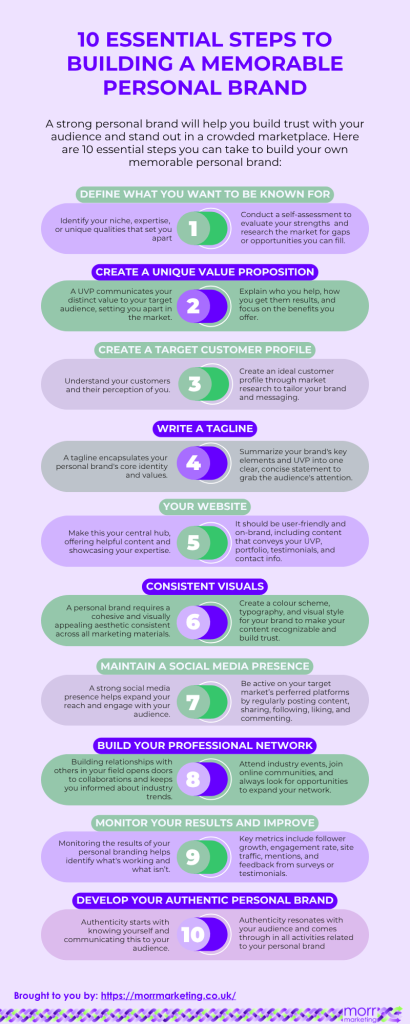
4. Write a Tagline for Your Personal Brand
A tagline is a concise statement that encapsulates your personal brand’s core identity and values. A good tagline captures the attention of your target audience, makes an impression, and is memorable.
This simple summary can be used for the following:
- Header for your website
- Social media profile or author bio
- Business cards
- Email signatures
- Elevator pitch when meeting new people.
You can create a tagline by summarizing your personal brand’s key elements and unique value proposition and distilling it into one clear, concise, snappy statement.
5. Your Website
Your website is the central hub for your personal brand, where you can provide valuable content and showcase your expertise.
It needs to be visually appealing, user-friendly, and on-brand. The domain name should be your name or something strongly aligned with your personal brand. The site should include content about you that conveys your UVP, portfolio if applicable, testimonials, ways to connect elsewhere, such as social media, and contact information.
6. Consistent Visuals
Your personal brand needs a cohesive and visually appealing aesthetic consistent across all your marketing materials.
Visual consistency is important because your visual language makes your content and marketing materials instantly recognisable. When they see you online, they know immediately it’s you. This helps build trust and credibility.
Create a colour scheme, typography, and visual style for your brand. Look at people you follow or influencers in your niche to get ideas.
7. Maintain a Social Media Presence
A personal brand needs a strong presence on all platforms its target audience uses. A thought leader is expected to be active on social media, and it helps you expand your reach. Even more importantly, it allows you to engage directly with your audience and build your reputation.
You should have a profile on each major platform that your audience is present on, don’t try to do them all. And spend time posting and sharing content, following people, liking, and commenting. Use your expertise to help your target audience and get conversations started.
8. Build Your Professional Network
Building and nurturing relationships with like-minded professionals and people in your field can open doors to collaborations and other opportunities. You can learn from and support each other and stay informed about the latest industry trends.
You can build your network by attending industry events and joining online communities. Always look out for opportunities to expand your network.
9. Monitor Your Results and Improve
It’s essential to monitor the results of your efforts so you can see what’s working and what isn’t. You can do this by choosing a few key metrics and tracking them regularly.
Key metrics include social media follower growth, engagement rate on social media or your blog, website traffic and behaviour, and brand mentions. You should also continually seek feedback through surveys, testimonials, and by directly asking your audience.
10. Develop Your Authentic Personal Brand
The key to a successful personal brand is authenticity. You should be the real you. That passion will resonate with your audience in all you do. Creating a strong personal brand starts with knowing yourself and then figuring out how to communicate this to your audience.
If you need help building your brand, either with creating the right UVP (unique value proposition) or marketing with authenticity, then please get in touch for a chat.
You can see a shorter video version of this blog post with just 4 steps on my YouTube channel – click this link.